Meta Ads
How many ads should actually be running inside one ad set
Short answerMy current default depends on budget. Under about $200 a day, I run one CBO campaign with a single ad set, three or four ads per concept inside it, and rarely more than 15 to 20 ads total. At $200 a day and up, I switch to ABO, one concept per ad set with roughly three to five ads each, starting each ad set around $100 to $150 a day.
“How many ads should I have in an ad set?” is one of those questions where most answers are a number with no reasoning attached. Three. Six. Fifty. Whatever worked for the person answering.
The number matters less than what the ads are and how much money is feeding them. So here’s how I actually work it out, in the order I do it, with the caveat up front that every account behaves a little differently and I adjust when one doesn’t respond the way this says it should.
Step one: let the budget pick the structure
Before counting ads, decide how the ad sets are built. That’s a budget question.
If you’re spending under about $200 a day, I keep it simple. One CBO campaign (campaign budget turned on), one ad set, and every concept goes inside it. Splitting a small budget across several ad sets just starves all of them.
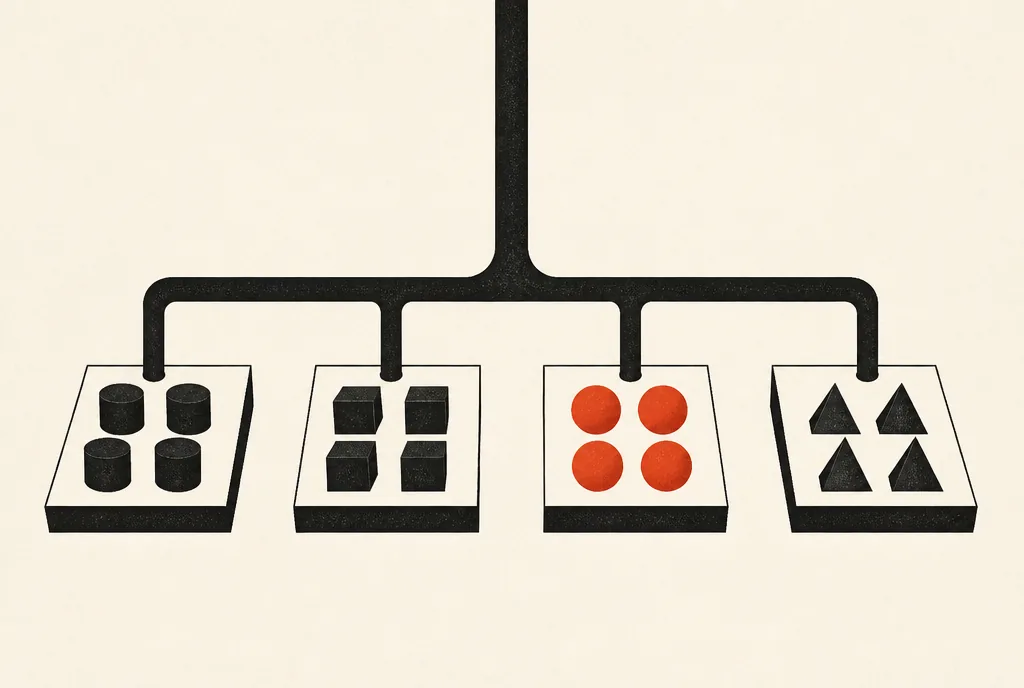
Once you’re at $200 a day or more, I move to ABO (ad set budgets), and every ad set tests its own concept. I start each one somewhere around $100 to $150 a day and usually run three to five of them. That lets me see which concepts are pulling their weight, and it means I can scale by adding new pockets rather than pouring more money into one.
For what it’s worth, my client default right now for a fresh account is the simple one: CBO, one ad set, optimized for sales.
Step two: count concepts, not ads
The mistake I see most is counting ads when you should be counting concepts. A concept is the idea underneath, one kind of person with one problem at one moment. The ads are different doors into that idea, different hooks, images or videos.
So “how many ads per ad set” really means “how many variations of this one concept”. In the ABO setup, the ad set is the concept. Statics and video for the same concept go in the same ad set together.
If you open an ad set and find twenty ads, ask how many genuinely different ideas are in there. Often it’s two or three wearing different outfits. If you’re unsure where that line sits, the difference between a concept and a hook covers it.
Step three: give each concept three to five ads
Inside a concept, I aim for roughly three to five ads. In the small single-ad-set setup, that’s three or four per concept, and I rarely let the whole ad set go past 15 to 20.
Why not one? Because Facebook sequences ads. What I’ve seen is that people look at three or four ads on average before they buy, and the system shows them in an order it thinks will get the sale. A single ad gives it nothing to sequence.
Why not thirty? Because the budget has to reach them. At $100 a day, thirty ads means most of them never get enough spend to tell you anything, and you’ll end up judging ads on a handful of impressions. I’m not of the belief that you need hundreds of ads running all the time. Especially at lower spend, it does more harm than good.
Expect lopsided spend at first. In a smaller ad set, Facebook will often find one or two ads and prioritize them. Then, four or five days later, it frequently flips and the other ads start getting more of the budget. Unless the favored ad is clearly getting no results, I leave it alone and let it settle.
Step four: add ads in batches, not one at a time
This one’s a platform fact, not just my opinion. According to Meta’s page on significant edits, adding a new ad to an ad set counts as a significant edit, which puts the ad set back into the learning phase. Meta says ad sets usually exit learning after about 50 results in the week after the last significant edit.
Quick arithmetic to show why that matters. Say your ad set spends $100 a day at a $25 cost per purchase. That’s about 28 purchases a week, already short of 50. If you drop in a fresh ad every other day, you keep restarting the clock.
So when I have new ideas, I’d rather launch a new concept as its own ad set, or add a batch of ads at once, than trickle them into a working ad set one by one.
Step five: don’t shrink the count by killing mid-performers
Here’s where a lot of accounts go wrong. The ad set has five ads, two look expensive, and they get switched off to “tighten it up”.
In one client’s account, Wayne’s, we had about 50 ads running and did the responsible-looking thing: we turned off the ten worst. The next week the account was running at a fraction of what it had been. We turned them back on, and the results came right back. Those ads weren’t failing. They were doing the middle of the story for the ads that got the credit.
My rule for killing an ad is strict. The reported CPA has to be three to four times my target, and the engagement has to be weak too. An ad that’s 20 or 30% worse than the others with strong engagement usually stays on. I went through this in more detail in why your best ad died the week you turned off the losers.
What to do this week
Open each ad set and write down, next to it, the concepts inside it and how many ads each concept has. Then check it against your budget. Under $200 a day, consolidate into one ad set with three or four ads per concept. Over $200 a day, give each concept its own ad set with three to five ads. Make the change in one go, then leave it for at least a week.
Does adding a new ad reset the learning phase?
Yes. Meta lists adding a new ad to an ad set as a significant edit, which sends the ad set back into learning. That’s why I add new ads in batches or launch a new concept in its own ad set, rather than dropping single ads into a working ad set every few days.
Should I use CBO or ABO for testing Facebook ads?
My general rule is budget-based. Under about $200 a day, one CBO campaign with a single ad set holding every concept. At $200 a day and up, ABO with one concept per ad set, starting around $100 to $150 each. Every account behaves a little differently, so if one setup isn’t working, test the other.
Why is Facebook spending my whole budget on one ad?
In smaller ad sets it often favors one or two ads at first, then shifts spend to the others a few days later as it learns who responds. Unless the favored ad is clearly getting no results, give it time. Turning the others off early can cut out ads that were helping the sale.
P.S. If you can’t name the concept an ad set is testing in one short sentence, that’s usually a bigger problem than how many ads are in it.