Meta Ads
How to tell the difference between ad fatigue and a broken offer
Short answerAsk whether the offer ever worked. If it converted profitably for a stretch and then faded while frequency climbed, you’re looking at Facebook ad fatigue or an exhausted pocket, and a genuinely new concept should bring results back. If it never converted anywhere, or brand new concepts aimed at new people also fail to hold, the problem sits in the offer or the market, not the ads.
These two problems look identical from inside Ads Manager. CPA creeps up, sales slow down, and the ads that used to work stop working.
But the fixes are opposites. Facebook ad fatigue gets fixed with new ads. A broken offer gets made worse by new ads, because you keep paying to show people something they don’t want. So it’s worth spending an afternoon figuring out which one you’ve got before you spend a month on the wrong fix.
Here’s the order I check things in.
Step one: rule out the dip
Before calling anything fatigue or a broken offer, make sure it’s a trend and not a few bad days.
I separate a performance dip from real exhaustion. A dip is temporary: the algorithm shifting, a learning reset after an edit, a platform bug, a weird week. Exhaustion is permanent for that pocket of buyers. The way I put it: a dip is a few bad days inside a healthy trend. Exhaustion is the trend itself. So I read the last 7 to 30 days, not the last 48 hours.
Also check that nothing is simply broken. Tracking that stopped firing, a checkout that broke on mobile, spend suddenly pouring into a junk placement. Those look like a dying offer and they’re not. If the ad set is young, give it time first. I laid out the clocks I use in how long to leave an ad set running before you judge it.
Step two: ask whether it ever worked
This is the question that sorts most cases on its own.
If the offer had a real stretch where it sold profitably on cold traffic, the offer isn’t broken in the usual sense. Something changed: the people, the pocket, the price point. That’s usually fatigue or exhaustion, and it’s fixable.
If it never really converted, look wider than Facebook. Does it sell through email? Referrals? Organic posts? The test I use for this is simple: does this offer convert for anyone, anywhere, at any volume? If it converts nowhere, no ad account is going to save it, and every new ad you write is money spent proving that again.
Step three: read frequency and reach together
Facebook ad fatigue leaves a fingerprint. The same people are seeing the ads over and over, and fewer new people are seeing them at all.
My rough thresholds: once a concept’s frequency gets above about 2.5, I’m watching it more closely. Above 3 to 3.5, I’m usually ready to turn it off for a while.
I had a client with beautiful ads that got him around a 10x return on every webinar launch, for about two weeks. Then everything would die. Every time we relaunched, same thing: it worked for a while and then died. He swore up and down that something was broken. So I pulled up his ad reports, and his frequency was 12. The average person in that audience had seen his ads twelve times.
Facebook wasn’t broken, and neither was his offer. It had shown the ads to everyone in that little pocket about a dozen times. That’s what Facebook ad fatigue looks like at the extreme.
If frequency is low and reach is healthy, and people still aren’t buying, fatigue is a much weaker explanation. People who’ve barely seen you can’t be tired of you.
Step four: run the creative reset test
Now separate tired creative from a tired concept, because they’re not the same thing either.
Launch fresh creative on the same concept: new images, new hooks, same idea underneath. If that resets performance, it was creative fatigue, and you’re fine. If new creative within the same concept fails to reset things after about 7 days, it wasn’t the creative. The concept has used up its pocket.
Then launch a genuinely new concept, aimed at a different kind of buyer with a different belief about their problem. This is the step that answers the title question.
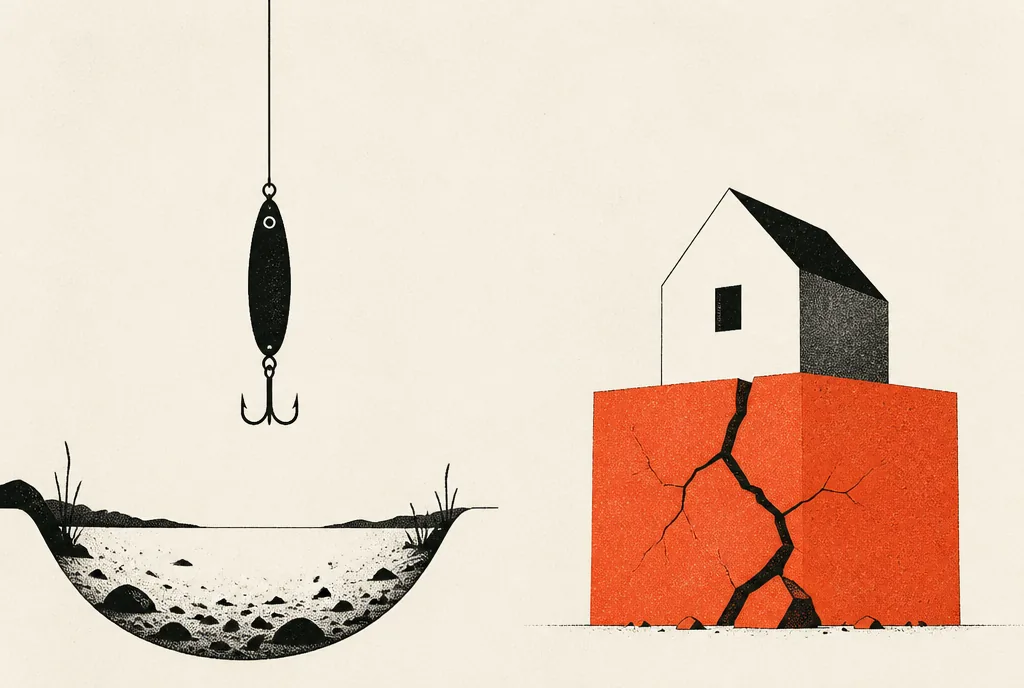
If new concepts work, your offer is fine. You’d just fished one part of the lake dry and needed to move. If new concepts, aimed at genuinely different people, also die fast or never start, that’s the market and the offer talking. As I said in an update a while back: “if I have a campaign and I just can’t seem to keep ads going, that’s telling me more about the state of the market overall, and the strength of my offer, than… the individual ads.”
Step five: look for offer fatigue
There’s a third case between “tired ads” and “broken offer,” and it’s the one people miss.
Sometimes the offer worked great, the market has simply heard it too many times, and everyone who wanted it at that price has bought or passed. I’ve described it as an audience that’s completely burnt out. In that scenario, you don’t really have an ads problem. You have offer fatigue, “and it won’t matter how many campaigns or how many ad accounts that you have.”
That’s why spinning up a new ad account rarely fixes this. It might work for a week or two, but Facebook figures out pretty quickly that you’ve already been through that audience.
Offer fatigue shows up as a slow decline over months rather than a sudden break. In the early months you’re fishing the high-intent buyers cheaply. A few months in, that tier is used up and the economics soften. After that, people have seen the ads repeatedly, costs climb, and click-through rates fall. Because it happens gradually, it never looks like market exhaustion in the moment. It looks like an ads problem.
The fix for offer fatigue is at the offer level: a new angle on the offer, a new mechanism, an adjacent audience, sometimes a different price point to open a new pocket of buyers. I covered when a price change helps (and when it doesn’t) in why lowering your price usually won’t fix your conversion rate.
Putting the answer together
If it worked before, frequency is high, and a new concept brings it back, it was Facebook ad fatigue or an exhausted pocket. Keep launching concepts into fresh parts of the market.
If it worked before, but new concepts only hold briefly and everything declines over months no matter what you launch, it’s offer fatigue. Work on the offer, not the ads.
If it never converted anywhere, it’s the offer (or the market is too small for it). Stop writing ads and go fix that first.
What to do this week
Pull the last 90 days for your account and write three things on one page: the best 30-day stretch your offer ever had, the current frequency on your top concept, and the date you last launched a genuinely new concept (a new buyer, not a new image). Those three answers will tell you which of the three cases you’re in before you write another ad.
What are the signs of ad fatigue on Facebook?
Rising frequency with flat or shrinking reach, climbing CPA on an ad or concept that used to work, and engagement slipping while click-through rate holds. I start watching a concept closely above a frequency of about 2.5, and above 3 to 3.5 I usually turn it off for a while.
How do I know if my offer is the problem?
Check whether it converts anywhere, through any channel, at any volume. If it sells through email, referrals or organic but not paid, the offer is probably fine. If it has never converted anywhere, or genuinely new concepts aimed at new people also fail, the offer or market is the likely problem.
Will a new ad account fix ad fatigue?
Usually not for long. A new account might work for a week or two, but in my experience Facebook recognizes you’ve already exhausted that audience. If the pocket or the offer is tired, the fix is a new concept aimed at new buyers, or work on the offer itself.
P.S. A dead campaign isn’t always a failure. Very often it just ran out of fish in that pocket, which means it did its job. The mistake is treating a finished pocket like a broken ad and rewriting the same idea for three more months.