Meta Ads
How long to leave a Facebook ad set running before you judge it
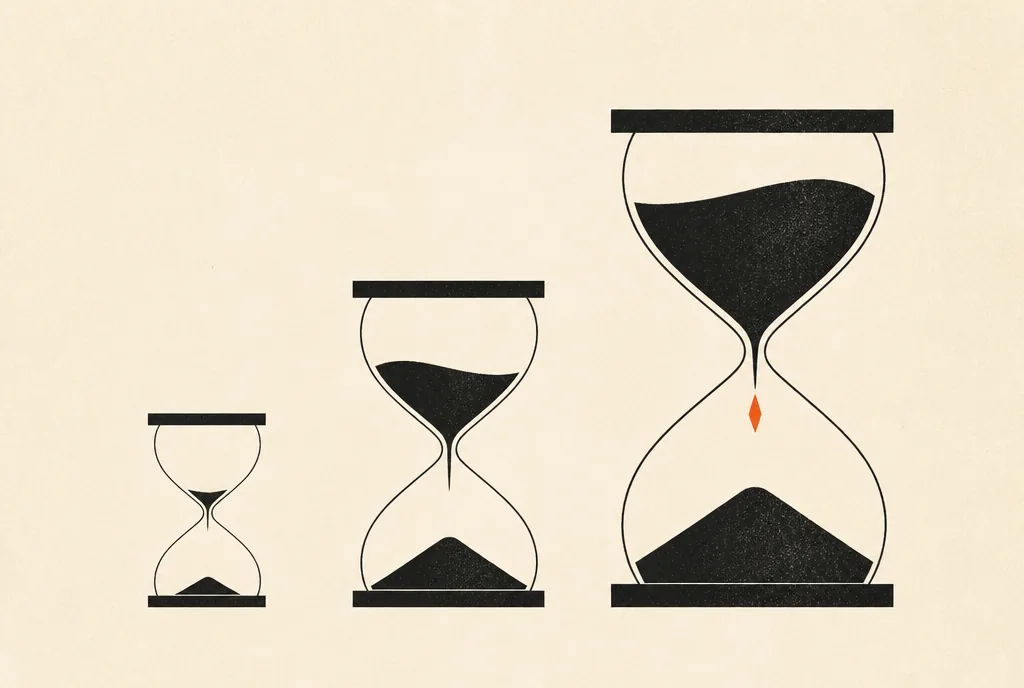
Short answerThere isn’t one number for how long to run Facebook ads, because you’re making different calls on different clocks. Under two full days is too early to judge anything. On a new account, under about five days is too early for structural conclusions. And a new ad in a higher-spend account can take three to six weeks to become a control. Read early data for signal, not winners, and judge the whole account before you kill anything.
The two answers you usually hear are “wait until it’s out of the learning phase” and “spend about twice your target CPA, and if it hasn’t made a sale, kill it.”
Both treat an ad set like a pass/fail exam you grade on a fixed date. That’s the part I disagree with.
Early data lies in both directions. Some things look great in the first few days and fall apart. Others look like losers for weeks and then turn into the best thing in the account. So the real question isn’t how long to run Facebook ads before you judge them. It’s which decision you’re trying to make.
Meta’s own number, and why I don’t use it as a kill switch
Meta’s guidance is useful here, so let’s start with it. During the learning phase, the delivery system is exploring the best way to deliver your ad set. Meta says performance typically stabilizes after an ad set gets around 50 optimization events within a 7-day period. A new ad set starts learning, and significant edits (changes to targeting, creative, the optimization event, adding new ads, bid strategy changes, or pausing for 7 days or more) send it back in.
The practical lesson from that is real. Stop editing things every day. Every significant tweak restarts the clock, and if you just raised the budget, that edit alone can make a working ad set look broken for a while.
But “stable” isn’t the same as “judged.” Plenty of accounts, especially low-ticket offers on modest budgets, won’t hit 50 purchases a week in a single ad set. If you waited for that before deciding anything, you’d wait forever. If you killed everything that hadn’t gotten there, you’d kill profitable ads.
Clock one: two full days, for signal
Under two full days, I don’t judge anything. Not the ad, not the ad set, not the concept.
After that, I’m looking for signal, not winners. Is anyone stopping? Clicking? Is the cost per click in a sane range? Is anything obviously broken? When I start a new account I’ll usually give it the first three days, then come back and study what came in.
And be careful with a hot start. A fresh campaign on a fresh ad account often gets a burst of sales early that it can’t keep up. A great first two days is a reason to keep watching, not a reason to triple the budget.
Clock two: about five days, for structure
On a brand new account, I don’t draw structural conclusions in under about five days. Structural meaning the big stuff: is this campaign setup working, is this offer viable on cold traffic, should the concepts go in a different direction.
Two days tells you whether the engine turns over. It doesn’t tell you where the car can go.
Clock three: weeks, for winners
This is the long clock people don’t have the patience for when they run Facebook ads, and it can cost an account its best ad.
I’ve had multiple clients tell me an ad I wrote didn’t do much for the first two, three, maybe four weeks. Then five to six weeks in, the same ad took off like a horse out of the gate and became the new control. For one new client, a control I wrote took about four weeks to outpace the other controls, and then it was dominating the account and bringing in better customers about 30% cheaper.
If I’d judged that ad at day seven, it would’ve been gone.
The same goes for whole offers. On an implementation call I told someone a new offer can take one to two months to mature, depending on the market, the audience and the pixel data. “So if you cut it like two weeks in, you could potentially have a new winner. Never even know it because you cut the life force out of it before it’s really mature.”
What I actually look at when the clock runs out
However long I run Facebook ads, time alone never kills one for me. Numbers do, and it takes two of them together.
My kill rule is that the reported CPA has to be three to four times my target, and the engagement (click-through rate and cost per click) has to be weak too. A high CPA with strong engagement usually means the ad is doing work I can’t see, so it stays on. And if an ad is within about 20 to 30% of my target CPA, I leave it alone, especially if people are engaging with it.
I learned to hold that line in my own account. I almost cut an ad because it was sitting in that yellow zone. A couple of days later, a lot of sales came in from that exact ad. I was really glad I went through my checklist and decided not to cut it.
The other thing I check before any kill is the blended CPA across the account: total spend divided by total purchases. The way I see it, Meta sequences your ads, and the credit usually lands on one of them even when several did the work. I went through that in more detail in what to do when your CPA doubles but your CTR holds. The short version is that an ad set can look bad on its own and still be holding the account up.
When you shouldn’t wait
Patience is for ads that are working as designed. It’s not for things that are broken.
If purchases aren’t being tracked, fix it today. If spend is suddenly pouring into a placement that’s sending you junk clicks and zero conversions, deal with that placement today. That kind of platform weirdness is a dip, not a verdict on your concept, so fix the delivery problem rather than killing the idea.
And if an ad is way past three to four times your target with dead engagement after the two-day minimum, you don’t need to wait six weeks to turn it off. The long clock is for ads that are close, not ads that are nowhere.
What to do this week
Make a simple judging calendar for every ad set you have running, so you decide how long to run your Facebook ads before the numbers start talking. Write down the launch date, the date it becomes judgeable (two full days later), and the earliest date you’ll crown a winner or write off an ad that’s close to target (three weeks out at minimum). Put your target CPA and your three-to-four-times kill number next to it. Then don’t touch anything between those dates unless something’s actually broken.
What is the learning phase on Facebook ads?
It’s the period when Meta’s delivery system is exploring how best to deliver a new or significantly edited ad set. Meta says performance typically stabilizes after about 50 optimization events within a 7-day period. Edits to targeting, creative, the optimization event, bid strategy, or adding new ads can restart it.
Should I turn off ads that are still in the learning phase?
Not just because they’re learning. I give everything at least two full days before judging anything, and I only kill an ad when its CPA is three to four times my target and its engagement is weak too. Something clearly broken, like tracking or junk placements, gets fixed right away.
How much should I spend before killing a Facebook ad?
I don’t use a fixed spend number. I wait at least two full days, then check whether the reported CPA is three to four times my target and whether click-through rate and cost per click are weak. If only the CPA is high and people are engaging, I usually leave it on and watch the blended CPA.
P.S. The most expensive habit in media buying isn’t spending too long on a loser. It’s checking the account every few hours and making a change each time. Every significant edit restarts the learning, so you never actually find out what the ad would have done.