Ad Creative
Why your video ad is losing to a plain block of text
Short answerUsually because the text ad carries one clear idea and the video doesn’t. On Meta the concept does the heavy lifting, and a video tends to blur it with extra ideas, a setting that pulls in the wrong people, or a delivery that doesn’t land. In my accounts, when I compare static vs video ads, the statics also tend to last longer. Video still wins with a charismatic person on camera or an offer that depends on trust.
I’ll get this out of the way first. I have a bias against video on Meta. I’ve said so on calls with my own students, and sometimes that bias bites me in the butt.
So take this with that in mind. But I also didn’t get the bias from nowhere. It came from what I’ve watched happen in real accounts, including my own.
If you’re testing static vs video ads and the plain text keeps beating your video, the common advice is to make a better video. Better hook in the first three seconds, better editing, better captions. Sometimes that helps. Most of the time I think it’s aimed at the wrong thing.
Facebook matches the idea, not the production
The way I teach it, a concept is the person the ad is built for: one specific person, one specific problem, one worldview about it. The creative is the clothes that concept is wearing. Facebook matches the person, not the outfit.
A plain block of text is very good at holding one idea. It has to be. There’s nothing else in it to carry the ad.
Video is the opposite. It’s easy for a video to wander. You open on one problem, mention a second, show a testimonial about a third, then pitch. Every one of those is a different signal about who this is for. My rule for any ad is one big idea. Never cram more than one main thought in, otherwise you’ll lose them. Videos break that rule all the time without anyone noticing, because it doesn’t feel like cramming when it’s spoken.
If you’re not sure what separates a concept from a hook, I went through the difference between an ad concept and an ad hook in another post. It matters a lot here.
Everything in the frame is doing targeting
The second problem is context. The way I understand it now, Facebook reads everything in your creative, not just the words. Every pixel in a picture and every second of a video gets read and ranked.
A text ad with a simple image gives off one clear signal. A video gives off dozens. The room you filmed in, what you’re wearing, who’s in the background, the music, the b-roll you grabbed from a stock site. Every one of those says something about who the ad is for, and not all of it lines up with your buyer.
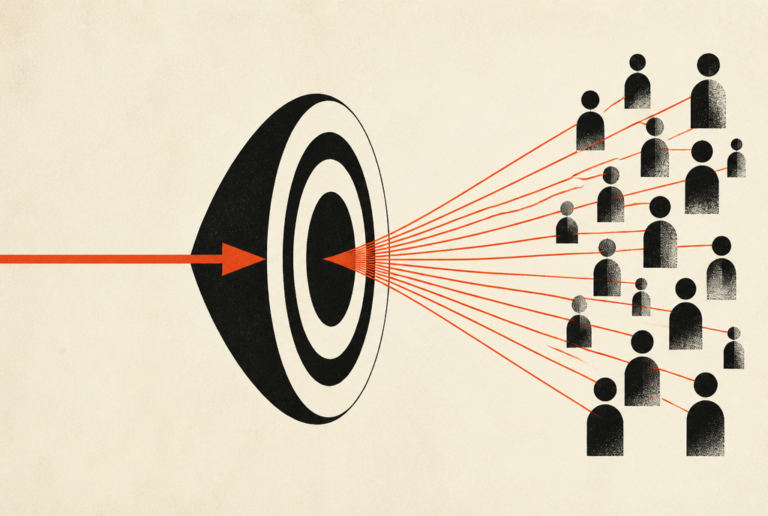
That’s how you get a video that pulls lots of cheap views from people who will never buy. It’s also why I’ll keep telling people your creative is doing more targeting than your targeting is. With video, there’s just a lot more creative doing it.
What I’ve seen happen to video over time
This is my observation from my own accounts, not a law of the platform. By and large, I’ve noticed Facebook puts you into a better pocket of traffic when you run static images vs video ads. And I’ve had video ads that did really well for about two weeks and then died out. Then I took the exact same thing, put it into a static, and it ran for months.
I also think about how people actually use Facebook. Facebook really wanted to be like YouTube, and it never really worked. How often do you go to Facebook to watch videos? Most of the people there respond well to text.
My own profile backs that up on the organic side. Text posts have driven the large majority of my engagement there, and the talking-head “how to” Reels I’ve posted got some of my worst distribution. The only Reel that ever really won for me was a joke about my dog. That’s organic, not paid, so don’t stretch it too far. But it lines up with what I see in ads.
When the video really is the problem
Sometimes the idea is fine and the video just isn’t delivering it. When it comes to video, how you say it is more important than what you say. Someone reading a script like a hostage is going to have a hard time beating a well-written paragraph.
Here’s a quick way to tell which problem you have. Write the video’s core message out as a text ad, with a simple image, and run it next to the video. If the text version wins, the idea was good and the delivery was hurting it. If both lose, the problem was the concept all along.
The honest exception
I’m not anti-video. I love video, I just don’t lead with it. My usual start is to take the image first and test video over time.
There are real cases where video wins. If the spokesperson is very charismatic on camera, I’ll test it early. If the offer involves someone coming into your home, like a lot of home services, video makes a ton of sense to me, because it’s a trust thing and it shifts people into a different mental gear.
And I have to admit it, for all my complaining. I’ve called myself a noted video ad hater, and I’ve still had Reels do very well running on Instagram only, and several video ads that were flat out working. So test it. Just test it properly.
Properly means the same concept. When I test static vs video ads on one idea, both go in the same ad set, because the concept is the thing being tested, not the format. Put a video about one idea against a static about a different idea and you’ve learned nothing about video.
What to do this week
Take your best-performing video and write out its one core idea in a single sentence. If you can’t, that’s your answer. If you can, turn that sentence into a plain text ad with a simple image (you, your product or your ideal buyer, with a short headline on it) and put it in the same ad set as the video. Give that static vs video ads test a week before you decide anything.
Do video ads perform better than image ads on Facebook?
Not reliably, in my experience. I’ve had video ads run well for about two weeks and die, while the same idea as a static ran for months. Video can win with a charismatic spokesperson or a trust-heavy offer, so test both formats on the same concept instead of assuming either one is better.
Why does my video ad get cheap views but no sales?
Often because the video carries more than one idea, or because what’s in the frame is attracting people who like the content but don’t have the problem. Check that the video makes one clear point for one type of buyer, and compare it against a simple text version of the same idea.
Should I put video and image ads in the same ad set?
I do, when they carry the same concept. The ad set represents the idea being tested, and the formats are different ways of delivering it. Putting different ideas in one ad set, or splitting one idea across ad sets by format, makes it much harder to learn what’s working.
P.S. Before you spend on another round of editing, read your video’s script out loud with no visuals. If it doesn’t sell as plain words, the edit was never going to save it.