Meta Ads
Why duplicating a winning ad set almost never works
Short answerWhen you duplicate a winning ad set, you copy the ad, not the reason it won. The win came from one concept finding one pocket of buyers, and an identical copy goes straight back to that same pocket, so you drain it faster instead of finding new people. Scale out with a genuinely different concept. The honest exception is a campaign that has hit a spend ceiling, where a duplicate can help.
There’s a sentence I’ve heard from advertisers more times than I can count. “This concept made us 40,000 in Q4. We just need to tweak it, or we just need to relaunch it, or we need to duplicate the campaign.”
I think it’s the most expensive sentence in ad management.
It feels completely rational. Something worked, so you make more of the thing that worked. That’s how most of business goes. It just isn’t how a Facebook ad account goes, and once you see why, you’ll stop reaching for the duplicate button every time an ad set starts winning.
What a duplicate actually copies
When you duplicate a winning ad set, you get the same images, the same copy, the same headline, the same broad targeting. Same everything.
Which means you also get the same concept. And the concept is the thing doing the real work.
The way I think about it, Facebook matches the person, not the outfit. The creative and the copy carry context (who this is for, what they’re living through, what they believe), and the system goes and finds people whose lives match that context. That’s why your ad image does more targeting than your targeting does.
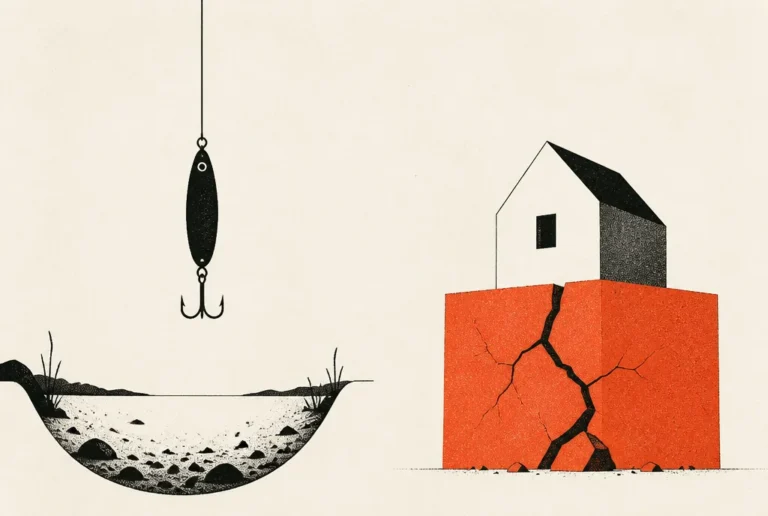
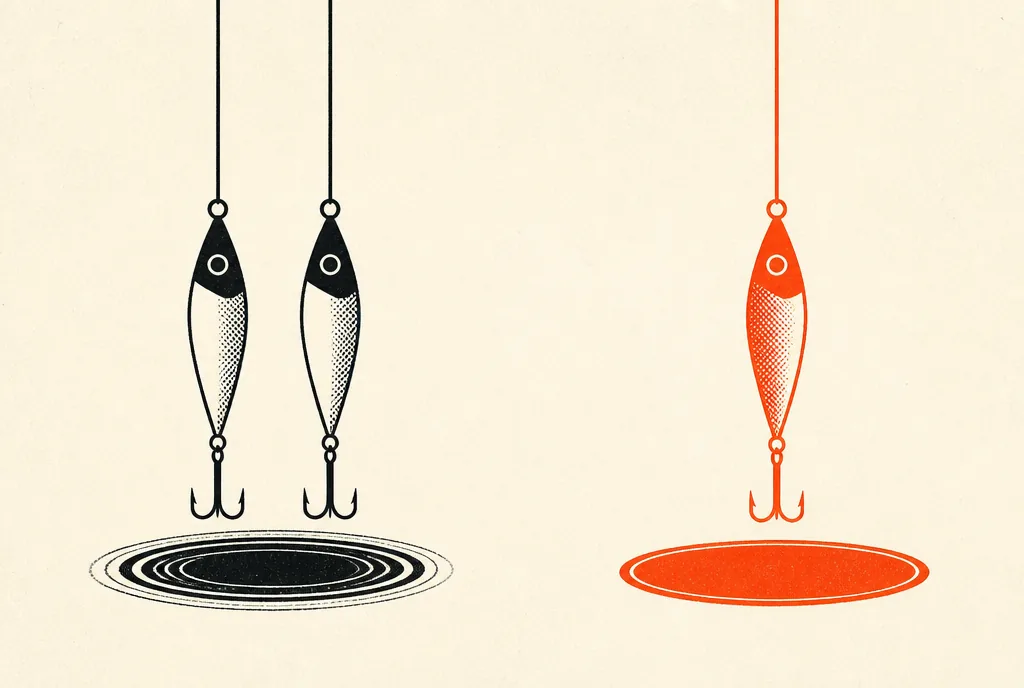
So an identical ad set isn’t a new lure in a new part of the lake. It’s the same lure, cast into the same spot, by a second boat. Refreshing creative is changing the color of your lure. Launching a new concept is moving to a completely different part of the lake. Duplicating doesn’t even change the color.
And unless you’ve set up exclusions, your ad sets are drawing from the same people across the account. Two copies of one concept end up chasing the same buyers.
One more thing to watch. A winning ad’s Post ID carries a lot of data and social proof. If your duplicate goes out on brand new posts instead of the original Post IDs, it also leaves that history behind and starts from scratch.
Why the copy dies faster than the original
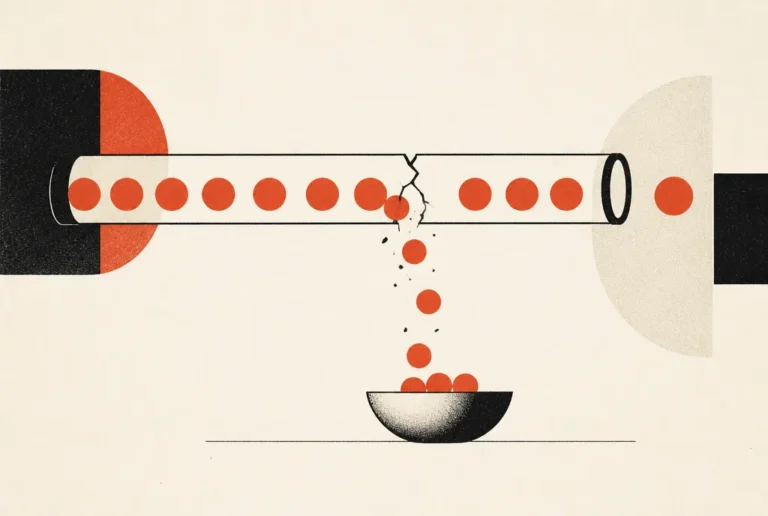
Every market is a lake, not a stream. There’s a fixed number of buyers in it at any given time, and inside that lake are pockets: groups of people who respond to one specific emotional context.
When a concept wins, it’s because it found a pocket. And a concept that found its pocket has, by definition, started depleting that pocket. Realistically only one or two percent of a market buys, so a good pocket might hold a couple hundred real buyers at any one time. They refresh over time, but not on your schedule.
Now duplicate that winning ad set and double the pressure on that pocket. You haven’t found new buyers. You’ve drained the same pocket twice as fast. You didn’t scale your winner, you harvested it.
I had a client one time with beautiful ads for his webinar launches. We got him a 10x return on every launch for about two weeks, then everything would die. Every time we relaunched his ads, it would work for a while and then die again. He swore something was broken. So I pulled up his reports, and his frequency was 12. The average person in that little pocket had seen his ads about a dozen times.
Facebook wasn’t broken. Relaunching the same thing just kept sending it back to the same people. (Meta defines frequency as the average number of times each person saw your ad, which is exactly why it’s one of the first numbers I check when a copied winner falls over.)
What to do instead: scale out, not up
You don’t have to swear off the duplicate button. Just stop putting the same thing inside it.
If you like the structure of the winning ad set, duplicate the shell and swap in a new concept. Keep targeting broad. Leave the original winner running at a reasonable budget so it can keep playing its part in the account, instead of turning it off or cranking it up.
Here’s the test I use to know whether what I’m launching is actually new. Does this ad require a different type of buyer to respond, or just a different visual? If a different type of person would respond to it, it’s a new concept and it can open a new pocket. If the same person would respond to either version, it’s a creative variation, and it’s going back into the same water.
Most advertisers who think they’re running ten concepts are really running two or three with creative variations stacked on top. That’s the blind spot a duplicate makes worse.
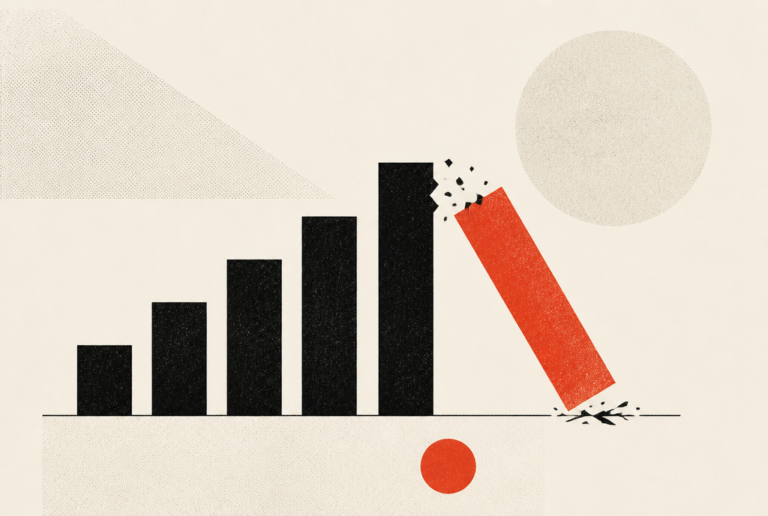
Anyways. If you just raised the budget on your winner instead of copying it, you’re doing the same thing in a different outfit, which is why ads so often stop working the day after a budget increase.
When duplicating actually is right
I want to be fair here, because there’s one situation where I duplicate on purpose.
What I’ve found is that a lot of accounts have a per-campaign spend ceiling, often somewhere around $500 a day. Push one campaign past it and the cost per acquisition goes through the roof and customer quality drops, no matter what you do. My read is the system can only find so many good buyers at once inside one campaign.
In that case I’ll duplicate the whole campaign and run the copy with the same Post IDs, so the data carries over. Two campaigns at the limit can do what one campaign pushed past it can’t.
But notice the conditions. It’s the campaign, not a single ad set. It uses the same Post IDs. It only makes sense after you’ve hit a limit you genuinely can’t get past with new concepts and new copy. And the market has to be big enough to hold more buyers. If the duplicate performs exactly the same as just raising the budget, your account doesn’t have a ceiling, and you’re back to scaling up with extra steps. Sometimes after an account has run for a long time, even that stops working and it needs fresh Post IDs entirely.
In a small market, none of this saves you. It doesn’t matter how good the ads are if there’s no fish in the lake.
What to do this week
Pull up the last winning ad set you chose to duplicate. Put the original and the copy side by side and look at frequency and cost per result over the days after you launched it. If frequency climbed on both and costs rose together, that’s one pocket being fished twice. Don’t make a third copy. Leave the original running at a reasonable budget, and put your next dollars into one new ad set built around a different type of buyer.
Should I duplicate a winning ad set or increase its budget?
Usually neither is the best first move. Both put more pressure on the same pocket of buyers. I’d rather launch a new concept aimed at a different type of buyer and leave the winner at a reasonable budget. Duplicating makes sense mainly when a whole campaign has hit a spend ceiling it can’t get past.
Why did my duplicated ad set perform worse than the original?
Most often because it went after the same people. An identical copy carries the same concept, so it competes for the same pocket the original already worked through. If it launched on new posts rather than the original Post IDs, it also started without the data and engagement the original had built up.
How do I scale a winning Facebook ad without wrecking it?
Scale out rather than up. Keep the winner running at a steady budget, then launch new concepts that would appeal to a different type of buyer, each in its own ad set. That reaches new pockets of the market instead of draining the one your winner already found.
P.S. A quick way to catch yourself: before you hit duplicate, try describing the person the new ad set is for. If it’s the same sentence you’d use for the original, you’re about to fish the same spot twice.