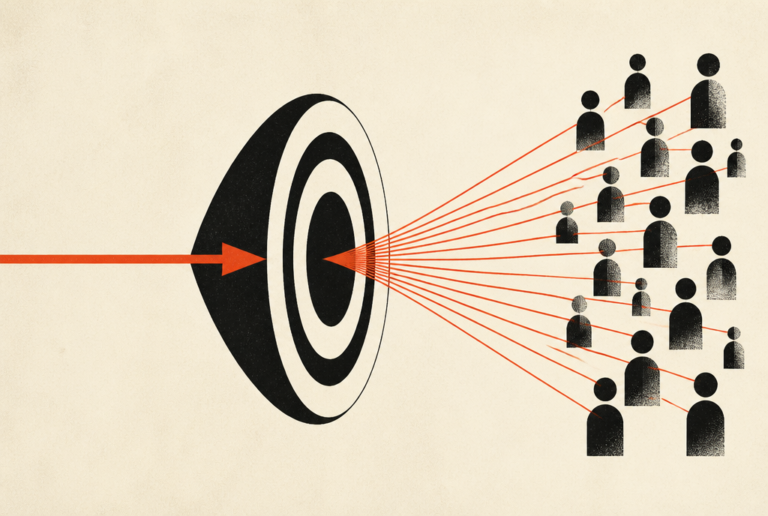
Ad Creative
How to write the first two lines of a cold traffic ad
The first two lines are what people see before the rest of your copy hides behind “See more”, and after the image they’re the strongest part of the ad. Use them to call out the person the ad is for and put an outcome or their lived moment in front of them, specific enough that the right reader feels seen. Write them from the concept, aim for intent over cheap curiosity, and test by rewriting only those lines.
There are times I’ve taken a less than stellar ad, rewritten only the first two lines, and ended up with a brand new control. Same image, same body copy. Just a new top.
That’s why I call them the rudder. The rest of the ad goes wherever those two lines point it.
In the feed, people see the image or video first, then the headline and the couple of lines above the “See more” button (how many lines depends on the placement and the device). Everything else is hidden until they tap. So after the creative, those two lines are the most powerful thing in your entire ad, and they deserve more of your time than they usually get.
For what it’s worth, in all my years of testing I’ve never once gotten a better result just by testing headlines. Once I have a good one I leave it alone. The hours people spend on headline tests are better spent here.
Step one: know who the lines are for before you write them
My order is concept first, then the hook, then the body, the close, the image and the headline. Most people start at the hook and work backwards, which is how you end up with a clever line aimed at nobody.
A concept is a picture of one type of person at one point in time: what they believe, what’s going on in their head, and a guess at what message will activate them. The hook is the pointed bit of messaging that goes in front of the ad, and its job is to pull in that specific version of the person. Not everyone scrolling. That person.
If you sit down to write the opening and nothing comes, it’s usually not a writing problem. A lot of the time the philosophy of the offer isn’t clear enough yet, or you don’t know enough about who you’re talking to. Fix that and the lines come a lot faster.
Step two: use line one to call out the person or their moment
There are a few openings I come back to over and over.
The first is calling out the audience, then letting the second line carry the problem and the solution. When I’ve taught this I’ve used “Christian husbands, here’s how to get your wife to want to listen to you so you can start to rebuild your relationship” as the example. The structure is right. Just know that Meta’s personal attributes policy doesn’t allow ads to assert or imply things like someone’s religion, age, health or financial situation, so in those categories you write about the group, not at “you”.
The second is describing the experience they’re living in, then teasing the answer. You’re showing them you know what it feels like before you tell them anything.
The third is comparison. The hook I used when I wrote about the perfect ad was “It’s really NOT fair that Facebook is charging you an arm and a leg for ads when others just like you are spending pennies on the dollar and stealing all the sales.” That one works by stirring up the feeling that it isn’t fair (because it isn’t).
And two I use constantly: “Here is what happens as soon as you do [thing] and how it gives you [result]” and “Here’s the sneaky little trick I’m using to turn [problem] into [outcome].”
Step three: give them the outcome without the thing they dread
For cold traffic, the shape I lean on most is a callout plus the outcome without the constraint. The constraint is whatever they assume stands between them and the result. Time, money, skill, the thing they hate doing.
Here’s one I wrote for local contractors: “This proven Facebook ad framework takes 10 minutes, and removes the guesswork out of running contractor ads.” Who it’s for is right there. So is the outcome, and so is the objection (they don’t have time) handled before they can raise it.
When a line feels weak, the fix is nearly always one of three things. Make it more specific, add a bit more curiosity, or show them the outcome. Vague lines ask the reader to do the work of figuring out whether the ad is for them. Most won’t.
Two things stay out of the top of my ads entirely, though: prices and guarantees. The first two lines are there to make the right person want to read, not to close the sale.
Step four: aim for intent, not just curiosity
This is where a lot of “great hooks” go wrong. A line can be very good at getting taps and still bring you the wrong people.
I optimize for intent over curiosity. If the ad sends people to a low-ticket offer, I put as much of the offer’s philosophy into the copy as I can. If it’s a webinar, I’ll lean maybe 10% more toward curiosity and tease the mechanism, but intent still wins.
The reason is what curiosity clickers do to an account. You can get a week or two of them, and then by week three or four the whole thing nosedives, because the account learned from the people you fed it. If your CTR looks great and nobody’s buying, it’s worth checking what’s happening after the click before you blame the top of the ad, but a curiosity hook is one of the usual suspects.
Match the emotion to the audience too. Someone in a low, desperate place needs to feel that you get them, so the opening can carry more feeling. A confident business owner wants the mechanism, and hype makes them feel like something’s off.
Step five: test by rewriting only the top
This is the practical part, and it’s cheaper than it sounds. You don’t need a new ad. You need new openings in front of body copy you already have.
That’s how I consistently open up my ads. One solid body, several different first two lines, each one aimed at the same person from a different angle. Since the creative does most of the targeting, keep the image the same while you test so you know the lines are what moved.
Give each version at least two full days before you judge it. If one clearly wins, keep it running and write the next round of openings against it.
What to do this week
Pick the ad in your account that’s getting spend but underperforming. Keep the image and the body copy exactly as they are, and write three new first-two-line versions: one that calls out the person, one that describes the moment they’re in, and one built on comparison. Launch them next to the original in the same ad set, and leave them alone for two full days.
What’s the difference between an ad hook and an ad concept?
A concept is the idea of who the ad is for: one type of person at one point in time, what they believe, and what will activate them. A hook is the short piece of messaging at the front of the ad whose job is to pull that person in. You can write many hooks for one concept.
Should Facebook ad copy be short if the first lines matter most?
Not necessarily. The first lines decide whether people open the copy, and the body does the persuading once they do. In my testing, longer copy wins about 80% of the time, roughly 400 to 650 words, with diminishing returns past that. Test both for your own market.
Can I say “you” in the first line of a Facebook ad?
Usually, yes. The exception is personal attributes. Meta’s advertising standards don’t allow ads that assert or imply someone’s religion, age, health, financial situation and similar traits, so “Are you Christian?” is out while “Date Christian singles” is fine. In those categories, write about the group.
P.S. If you’re stuck on the first line, the problem is usually upstream of the line. Get clear on exactly who the ad is for, what they already believe, and what they’re living through. The opening gets a lot easier after that.