Meta Ads
How to scale a Facebook campaign out instead of up

Short answerScaling up means pushing more budget into the concept that’s already working. Scaling out means adding new concepts that reach different types of buyers, so the total pool you’re selling to gets bigger. To scale Facebook ads out, leave your winner running at a sensible budget, map which pockets of your market you’ve already reached, and launch new concept hypotheses aimed at the ones you haven’t, one concept per ad set.
You’ve got a winner. The natural move is to give it more money. It’s the move every course taught for years: take the winners, raise the budget a bit each day, turn off the losers.
And then, usually, it hits a wall.
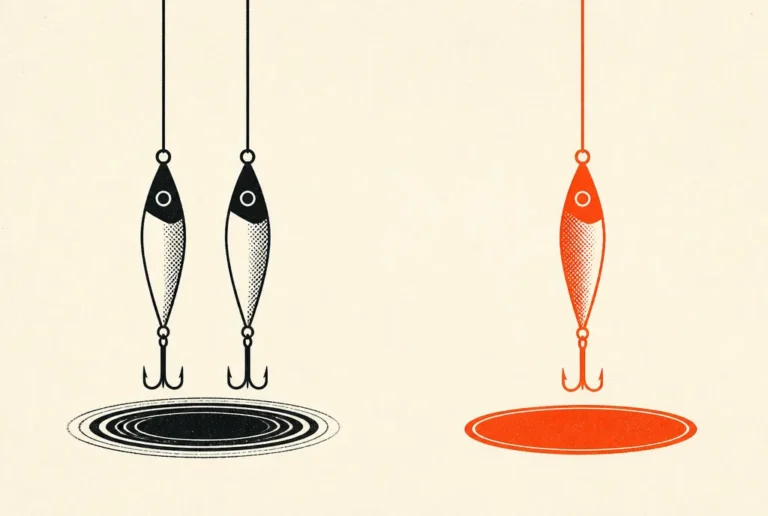
The reason is simple once you see your market as a lake instead of a stream. There are only so many buyers in any given pocket of it at one time. More budget doesn’t find more buyers in that pocket. It drains the same pocket twice as fast. You didn’t scale your winner, you harvested it, and that’s why it dies so quickly.
Scaling out is the other way to scale Facebook ads. Here’s how I run it, step by step.
Step one: know what a buyer is worth before you chase more of them
Before you add anything, write down two numbers. Your target cost per acquisition (what you’d love to pay) and your breakeven (roughly what a customer is worth to you, including any backend you can count on, minus your costs).
Scaling out means some of your new concepts will come in above target for a while. You need to know how far above target you can live with, or you’ll kill things in a panic. If you’ve never done this math, what a healthy cost per result looks like is a decent place to start.
Step two: leave the winner alone
This part feels backwards. Don’t push the winner, and don’t turn it off either.
In an account that compounds, a working concept stays at a reasonable budget and keeps playing its part. It’s still finding buyers in its pocket, and from what I’ve seen, the ads around it are helping each other close the sale. The mistake is treating it as the thing you scale. It’s the thing that keeps the lights on while you go find the next pocket.
If you’ve already cranked the budget and it fell over, I wrote about what’s going on when ads die right after a budget increase.
Step three: map the pockets you’ve already fished
List your last ten ads. Then sort them honestly into genuinely different concepts versus creative variations of the same concept.
The test: does this ad need a different type of buyer to respond, or just a different visual? If the same person would respond to both, it’s the same concept. Most advertisers who think they’re running ten concepts are really running two or three with variations stacked on top.
Now draw your account as a lake. Mark the pockets you’ve reached and whether each looks alive (reach still growing, blended CPA steady, engagement holding) or tired (frequency climbing, blended CPA rising, engagement fading while clicks hold). Then draw the blank water you haven’t touched yet. That blank water is where you scale Facebook ads out.
Step four: write a concept for each patch of blank water
A new pocket isn’t a new interest, a new lookalike or a new custom audience. It’s a different emotional context. Two people with identical demographics can sit in completely different pockets, one frustrated because they feel ashamed and the other frustrated because they feel like they’re wasting their potential.
So for each patch of blank water, write a concept hypothesis: one specific person, one big problem, where they are in their thinking, and what they believe about it. Some places I look for them: a group adjacent to your core buyer who has the same problem for a different reason, the same buyer at an earlier or later point on their timeline, a constraint your current ads never address, and even a different price point, since every group will only pay certain prices.
The best example I have of this is a client in a tiny corner of the music world. We launched and it was beautiful, something like a six or seven X return for a couple of weeks. Three weeks later it died. He was freaking out. I didn’t touch the creative. I looked at his market and realized we’d fished the obvious pocket dry. So we built new concepts aimed at other kinds of musicians, adjacent pockets with fresh water, and the returns went back up, even past the original peak for a while.
All we did was zoom out and fish a bigger part of the lake.
Step five: launch each concept in its own ad set
I give each new concept its own ad set with four or five ads in it, so I can read how that concept is doing as a whole instead of guessing from single ads. Static images with a clear headline are my default starting point. Targeting stays simple (location, age, gender) because the concept and the creative do the real work of finding the person.
Then wait. Under two full days is too early to judge anything. And don’t be surprised if a new concept is slower than your winner at first. New ads can take weeks to turn into controls in bigger accounts. I’ve written ads that took four to six weeks before they took off.
Then judge the account, not the ad
The scoreboard when you scale Facebook ads out is blended CPA across the whole account (total spend divided by total purchases), trending month over month. Not the CPA on any single ad.
If a new concept is within about 20 to 30% of your target and people are engaging with it, leave it on. It’s probably doing work you can’t see. I only kill an ad when its CPA is three to four times target and its click-through rate and cost per click are weak too.
Then do it again next month. Audit, map, launch. Every cycle, the number of pockets you’re fishing grows, and so does the volume you can buy without the cost per sale running away from you.
When scaling up is fine
I’m not against budget increases as a way to scale Facebook ads. If a concept is healthy, reach is still growing, frequency is low and you have room under breakeven, raising the budget is a reasonable thing to do. Some markets are big and slow-moving (weight loss or dog training, say) and a concept can carry more spend for longer there. Faster-moving markets burn through concepts in a few months.
And in genuinely small markets, scaling out sometimes means new offers, not just new ads, because there just aren’t that many fish. What scaling up can’t do is create buyers who aren’t there. That’s what the new concepts are for.
What to do this week
Take your last ten ads and sort them into concepts versus variations. Write down how many real concepts you have. Then write one new concept hypothesis aimed at a type of buyer none of them speak to, and launch it in its own ad set with four or five ads. Don’t touch your winner’s budget while you do it.
What is the difference between scaling up and scaling out on Facebook?
Scaling up puts more budget behind the same concept, which pushes it deeper into the same group of buyers until costs rise. Scaling out adds new concepts aimed at different types of buyers, which grows the total pool you’re reaching. That tends to keep the cost per sale steadier as total spend grows.
Should I increase the budget on my winning ad set?
Sometimes, if reach is still growing, frequency is low and you’re well under breakeven. But more budget doesn’t create more buyers in that pocket. Usually the better move is to leave the winner at a reasonable budget and put new money into new concepts aimed at buyers it isn’t reaching.
How many new concepts should I launch at once?
Enough to learn something, not so many that you can’t read them. One concept per ad set with four or five ads each works for me. Launching a few genuinely different concepts every month beats launching dozens of variations of the one that’s already working.
P.S. A campaign that dies after three weeks isn’t always a failure. Sometimes it found everyone in that pocket who was ready to buy. That’s a mission accomplished, and the signal to go find the next pocket.