Funnels
Why warm and cold traffic convert so differently on the same page
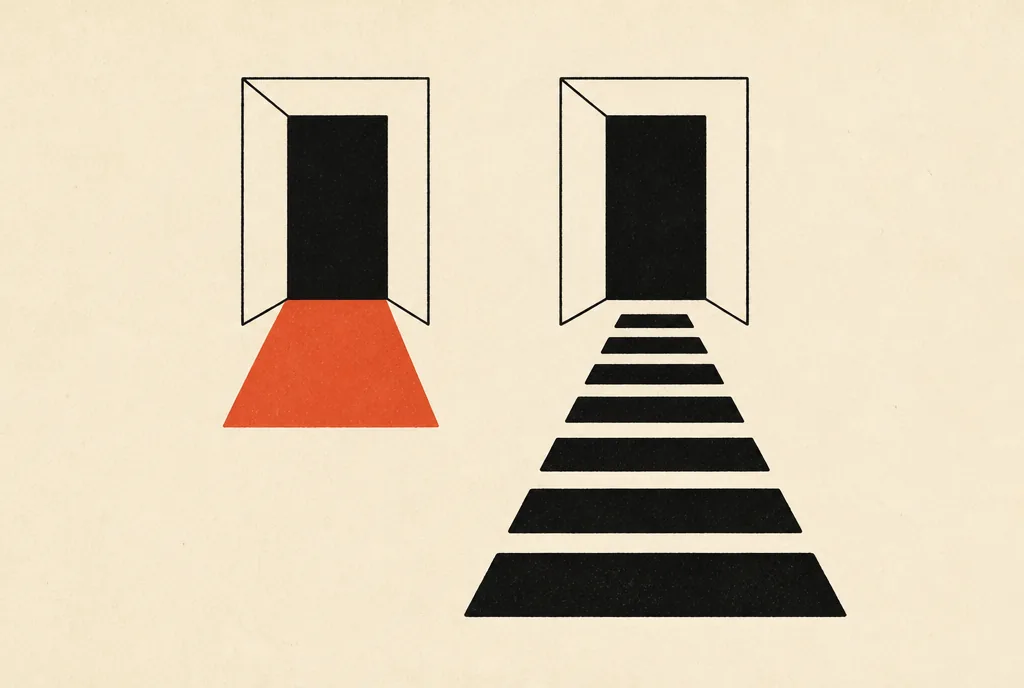
Short answerWarm traffic arrives already trusting you, so a page can skip proof and rush to the button and still convert them. Cold traffic arrives assuming you’re guilty until proven innocent, and needs the problem, the proof and the mechanism in the right order before it sees a price. Same page, different buyer. When warm traffic converts worse than cold, the warm audience has usually been sold to already.
Here’s a pattern that costs people a lot of money. They build a sales page, send it to their email list, and it converts nicely. So they turn on cold ads to the same page, and it falls flat.
The conclusion is almost always “the page works, the ads are broken.” And they start tearing apart the ad account.
Most of the time I think that’s backwards. All the page proved is that it works on people who already trust you, which is a much smaller claim.
What warm traffic brings with it
If you already have a warm audience, everything is easier. They know who you are, they’ve read your emails or watched your stuff, and they’ve mostly decided you’re not a scammer. Some of them already agree with how you see the problem.
That means a page can do a lot wrong and still convert them. It can lead with the offer, put the buy button in the first screen, skip the proof and assume they understand the mechanism. Warm traffic fills in the gaps with trust it already had before it arrived.
Nothing wrong with that. It’s just why a warm conversion rate tells you so little about how the page will do with cold traffic.
What cold traffic needs that the page skipped
A cold prospect views you as guilty before you have the chance to prove your innocence. The proof is what lets them open the door. Then they walk through and come inside the building.
And the colder the traffic, the more important the buying pattern is. Every market has an order it needs to hear things in to go from never having heard of you to buying. For my own market, which is very skeptical, the order that works on ice-cold traffic is promise, then proof, then why it works, then the offer. In skeptical markets like that, proof has to come before the argument, because the reader is presumed to think you’re lying.
Put a page built for your list in front of that reader and you can see the problem. The proof is buried, the price shows up before the belief does, and the button is sitting there before they’ve even agreed the problem is real. I wrote about sequencing a page so belief builds before the price appears, and that’s usually where the fix lives.
There’s one more difference worth knowing. Someone buying from a cold ad isn’t saying yes. They’re saying maybe. They don’t have the capacity to say yes yet, because they don’t fully understand your philosophy or your argument. They’re saying “I’m interested enough to check this out.” A page that closes as if it needs a full yes will overshoot cold traffic, even if your list happily gives you one.
Why letting cold traffic rush hurts
In jaded, sophisticated markets, cold traffic needs to go through the sales process. If they skip it or go too fast, everything suffers.
That’s why a page that’s great for your list can lose money on ads. The list doesn’t need the sales process. They went through it over months of emails. Cold traffic gets one page to do all of that work, and if the page is built to be quick for warm readers, the work never happens.
It’s counterintuitive, but adding steps and slowing people down can raise cold conversions. I made the case for that in why more steps in a funnel can raise conversions.
When warm traffic really does convert worse than cold
Now the honest part, because sometimes your list genuinely converts worse than strangers on the same page. It happens, and it usually means one of two things.
The first is offer fatigue. Your warm audience has seen this pitch before, maybe several times. The people who wanted it already bought. The ones left have heard every argument you’ve got and decided each time. In that scenario you don’t really have an ads problem or a page problem. The audience is burnt out on the offer, and it won’t matter how many emails you send.
The second is price. Every group will only pay certain prices. If your list has been with you a while, the people most willing to pay this price may have already bought, and cold traffic is bringing you fresh people who haven’t been asked yet.
Either way, sending the same page harder rarely fixes it. The fix for your list is usually a new angle, a new offer, or a different price point for the people who’ve already said no to this one.
And this is part of why I never rely on warm audiences. A list is great, but it’s finite. I always want to be acquiring new people from Facebook, which means I need pages that work on strangers.
How to tell which one you have
Stop looking at one blended conversion rate for the page. Split it by source. Tag your list traffic (warm) and your ad traffic (cold) separately, and follow each through the same chain: landing page, checkout, purchase.
If cold traffic drops off before checkout, the page is assuming trust it hasn’t earned. Move proof higher and make sure the problem is agreed on before the first button. If cold makes it to checkout and bails there, look at which page is actually losing the money before you redesign anything. If your list is the one underperforming, look at how many times they’ve seen this offer.
What to do this week
Put separate tracking on your email traffic and your ad traffic to the same page, and let both run for a week. Then write the landing, checkout and purchase numbers for each source side by side. Whichever source falls off first, and where, tells you whether you need to rebuild the page’s order for cold traffic or give your list something new.
Why does my landing page convert my email list but not Facebook ads?
Your list already trusts you, so it forgives a page that skips proof or shows the price early. Cold ad traffic doesn’t. It needs the problem, proof and mechanism in the order your market expects before it sees an offer. Rebuild that order for cold visitors before you blame the ads.
Should warm and cold traffic go to different pages?
It can help, because they need different amounts of proof and explanation. But the page that has to work is the one for cold traffic, since that’s where new customers come from. A page that converts strangers will usually still convert your list. The reverse is often not true.
Why is my email list not buying anymore?
Often it’s offer fatigue. The people who wanted the offer at that price already bought, and the rest have heard your arguments and passed. Sending the same pitch harder rarely fixes it. A new angle, a new offer or a different price point for that list usually does more.
P.S. If your only proof that a page works is that your list bought from it, treat that as a soft launch, not a verdict. The real test is what strangers do with it.