Meta Ads
Why your Facebook ads stopped working the day after you raised the budget
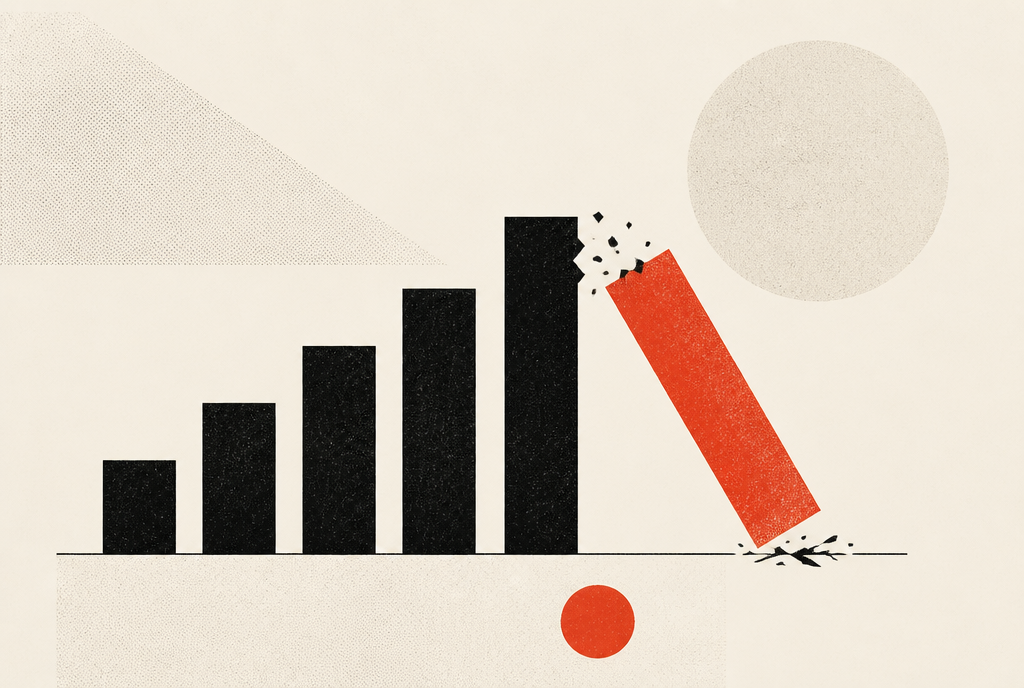
Raising the budget didn’t break your ads. It reset the learning and changed who Meta buys for you. A bigger budget forces the algorithm to reach further down its ranked list of likely converters, so the cheap people it had been picking off first get exhausted and the expensive ones start showing up. Nothing is broken. The easy inventory just ran out.
This one comes up constantly, and it always arrives the same way. Somebody has a campaign that’s finally working. Good cost per acquisition, steady volume, the kind of account you actually want to look at in the morning. So they do the rational thing and give it more money.
Twenty-four hours later the CPA has doubled and they’re staring at the screen wondering what they touched.
Anyways. Here’s what actually happened, and it has almost nothing to do with the thing most people blame.
Meta is a fruit picker, not a search engine
I use this picture constantly because it’s the only one that’s ever made this land for people. Imagine someone picking fruit off a tree. They start at the bottom, because that’s where the easy fruit is. They can stand flat-footed and fill a basket fast.
Your ad account works the same way. When you set a budget, you’re telling Meta how much fruit to bring back today. At a small budget it only ever has to pick from the bottom of the tree, which is where the people who were going to buy anyway are hanging.
When you raise the budget, you haven’t made the picker better. You’ve just told them to fill a bigger basket in the same amount of time. So now they’re climbing. And the fruit further up the tree costs more to reach.
That’s your CPA increase. It isn’t a malfunction. It’s the price of the next tier of buyer.
The part that makes it look sudden
What confuses people is the timing. If it were purely an inventory problem you’d expect a gradual slide, not a cliff.
The cliff comes from the learning reset. A significant budget change is an edit, and edits push an ad set back into learning. So you get two things happening at once: the delivery system is re-exploring at exactly the moment it’s also being asked to buy more expensive people. Those two stack, and the result looks like a crash rather than a drift.
Which is why the panic response is usually wrong. People see the number, assume they broke something, and revert the budget. That’s another edit. Another reset. Now they’ve paid the learning tax twice and confirmed a theory that was never true.
How to tell this apart from a real problem
The tell is in which metric moved.
If your click-through rate is roughly where it was but your cost per result climbed, that’s audience economics. You’re reaching people who are less interested, exactly as you asked. The creative is still doing its job on the people who see it.
If your click-through rate fell at the same time, that’s a different animal, and the budget probably isn’t the cause. That’s fatigue or a creative problem wearing a budget-shaped costume.
And if your cost per click barely moved while your cost per purchase doubled, look past the ad account entirely. Something downstream is leaking. The traffic is arriving and failing to convert, which is a landing page or an offer conversation, not a media buying one.
What to do instead of reverting
First, decide what CPA you can actually afford before you touch anything. Not the CPA you had. The one your margins tolerate. Those are frequently different numbers, and a lot of people accidentally optimise toward a cheap CPA that was never the constraint.
Say a customer is worth $300 to you over the first ninety days and you’re happy at a 3-to-1. You can pay $100. If your budget increase pushed you from $60 to $85, you didn’t break anything. You bought more volume at a price you can still live with. That’s a good trade and people kill it out of reflex.
Second, if you do need to increase, give the system room instead of a shock. Sizeable jumps buy you a long learning period. Smaller, less frequent moves buy you a shorter one.
Third, and this is the one I’d actually push you toward: stop trying to force more volume through one winning ad set. Scale out instead of up. A second ad set aimed at a genuinely different audience, or a new concept aimed at a different belief, adds volume without climbing the same tree. Complexity kills, but duplication of the wrong kind is not the same thing as breadth.
The uncomfortable version
Sometimes the honest answer is that your winning CPA was never scalable, and the small budget was hiding it.
A campaign that works at $50 a day and dies at $200 is telling you something real about how many people currently want what you’re selling at the price you’re asking. That’s not a media buying failure. That’s the offer talking, and no amount of budget strategy fixes it.
I know that’s the less fun conclusion. It’s also the one that saves the most money, because the alternative is spending three months tuning delivery settings on a ceiling problem.
How long should I wait after raising a Facebook budget before judging results?
Give it long enough to exit learning and then a few days of stable delivery on top. Judging an ad set in the first day or two after a budget change is mostly reading noise, because the system is re-exploring and the early data is unrepresentative of where it settles.
Is it better to raise budgets by a small percentage or make one big jump?
Smaller, less frequent increases cause shorter learning disruption, but the percentage itself is not magic. What matters is how many edits you make and whether the audience can actually absorb the extra spend. Frequent small increases can disrupt more than one decisive move.
Should I revert the budget if my CPA goes up?
Only if the new CPA is genuinely above what your margins support. Reverting is another edit and another learning reset, so doing it reflexively costs you twice. Work out your affordable cost per acquisition first, then decide.
P.S. — The fastest way to stop having this conversation with yourself every month is to write down your maximum affordable CPA and stick it somewhere you’ll see it. Most of the panic around budget increases is really just not knowing what number you’re allowed to pay.